

Indonesia, a major global cocoa producer, employs an Export Duty policy on cocoa beans to support its domestic downstream processing industry. This policy, first implemented in 2010, aims to ensure an adequate supply of raw cocoa beans for local processors while simultaneously boosting the export of higher-value processed cocoa products (such as cocoa butter, cake, and powder).
Current Structure of the Export Duty
The legal basis for the export duty is typically governed by a Regulation of the Minister of Finance (PMK). While the latest regulation may be subject to periodic revision, the core mechanism remains a progressive export duty applied to cocoa beans (raw cocoa) based on the international benchmark price.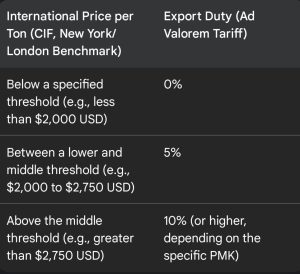
- Progressive Tariff System
The tariff is an ad valorem tax, meaning it’s a percentage of the export value. The percentage increases in steps corresponding to the fluctuating international price of cocoa beans.
Note on Specific Rates: The exact price thresholds and corresponding percentage rates are subject to change based on the specific, latest Minister of Finance Regulation. Exporters must consult the most current PMK for precise figures, which are often adjusted monthly or quarterly.
Historical Context: The initial and widely cited regulation was PMK No. 67/PMK.011/2010, which introduced rates up to 15% in the highest price bracket. Subsequent regulations maintain this progressive structure. - Objectives of the Policy
The primary goals of imposing an export duty on raw cocoa beans are:
Securing Domestic Raw Material Supply: By making raw bean exports less profitable compared to domestic sales, the government ensures a stable and affordable supply for local processing factories.
Downstream Industrial Development: It serves as an incentive for companies to invest in processing and manufacturing facilities, shifting Indonesia’s role from a raw material exporter to a processed product exporter. This generates higher export value (added value).
Revenue Generation: The duty contributes to state revenue, which can then be utilized to fund sector-specific programs.
Upcoming Development: The Export Levy
In a notable upcoming shift (as of mid-2025 planning), the Indonesian government intends to introduce an Export Levy on cocoa. This levy is distinct from the existing Export Duty.
Purpose: The revenue generated from this new levy is specifically earmarked to finance cocoa development programs. These include initiatives such as replanting (to improve tree stock and yield), quality improvement, and capacity-building for farmers and human resources in the cocoa sector.
Mechanism: It is anticipated that the overall export cost for cocoa will remain similar, but the revenue collected will be split—part as the existing Export Duty (State Revenue) and part as the new Export Levy (managed by an agency like the Plantation Fund Management Agency – BPDPKS, similar to the palm oil fund).
Implementation Timeline: This new levy policy is projected to take effect in the second half of 2025, pending the issuance of a new Minister of Finance regulation.
Impact and Implications
The export duty policy has had several significant impacts on the Indonesian cocoa sector:
Positive Impacts (on Downstream Industry):
Increased Processing Capacity: The policy successfully stimulated the growth of the domestic cocoa processing industry, leading to a substantial increase in the export volume and value of processed cocoa products.
Diversification: Indonesia has managed to diversify its cocoa exports away from solely raw beans, enhancing its position in the global processed cocoa market.
Negative Impacts (on Bean Producers):
Price Reduction for Farmers: The duty can lead to lower domestic prices for cocoa beans, as exporters pass on the tax burden to producers. This potentially reduces the profitability and surplus for cocoa farmers.
Decreased Raw Bean Exports: As intended, the volume of raw cocoa bean exports has decreased significantly since the policy’s implementation, making Indonesian beans less competitive in the international raw bean market.
Conclusion
Indonesia’s current policy on cocoa bean exports is characterized by a progressive export duty aimed at supporting industrialization. The impending introduction of an Export Levy signals the government’s dual focus: continuing to support downstream processing while also securing dedicated funding for the upstream development and quality improvement of the raw cocoa sector. Businesses involved in the trade must closely monitor the official regulations from the Minister of Finance and the Ministry of Trade for the most up-to-date tariff schedules and the final details of the new export levy.